
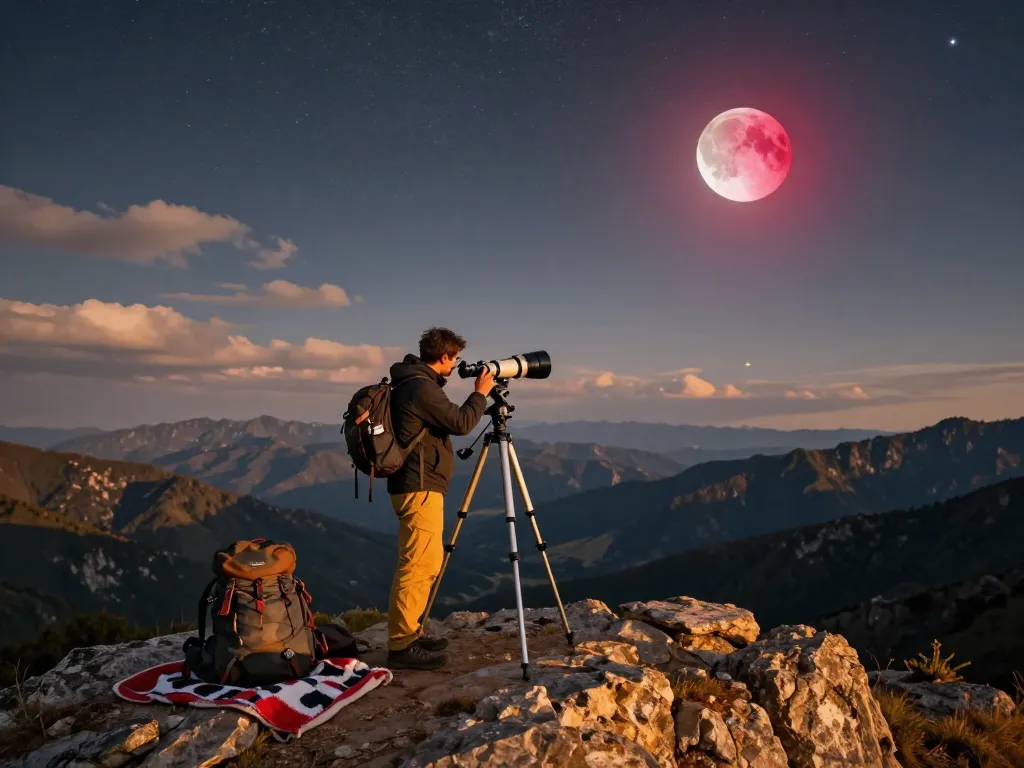
Understanding the Total Lunar Eclipse
The total lunar eclipse is an awe-inspiring astronomical event that captures the imagination of stargazers and casual observers alike. Unlike solar eclipses, which are less frequent and require specific conditions for visibility, total lunar eclipses are relatively common and can be seen by anyone on the night side of the Earth when they occur. During a total lunar eclipse, the Earth passes directly between the Sun and the Moon, casting its shadow over the lunar surface, which can result in a stunning sight often referred to as a “blood moon.” When exploring options, Total lunar eclipse events offer a unique glimpse into the dynamics of our solar system and the interplay of light and shadow.
What Is a Total Lunar Eclipse?
A total lunar eclipse is characterized by the Earth’s umbra completely covering the Moon. This type of eclipse occurs when the Sun, Earth, and Moon are aligned in a straight line, forming a syzygy. The event takes place only during a full moon phase, which typically occurs once every 29.5 days. However, not every full moon results in a lunar eclipse; it requires the orbital planes of the Earth and Moon to intersect. During the eclipse, the Moon can take on a reddish hue due to Rayleigh scattering, a phenomenon where shorter blue wavelengths of light are scattered out, leaving the longer red wavelengths to illuminate the Moon.
The Science Behind Lunar Eclipses
The science of lunar eclipses is both fascinating and complex. For a total lunar eclipse to occur, three key conditions must be satisfied: the Moon must be full, the Earth must be positioned directly between the Sun and the Moon, and the Moon must pass through the Earth’s shadow. There are different types of lunar eclipses: total, partial, and penumbral. A total lunar eclipse is distinct because the entire Moon is covered by the Earth’s umbra, creating the striking reddish appearance. The duration and visibility of these eclipses can vary widely based on the specific alignment of the celestial bodies, making each event unique.
Famous Total Lunar Eclipses in History
Throughout history, there have been many notable total lunar eclipses that have captured public attention. For instance, the “Lunar Eclipse of 1982” showcased an unusually long duration, while the “Super Blood Moon” of January 2018 marked a rare convergence of a supermoon, a blue moon, and a total eclipse. These events often inspire people to engage with astronomy and can trigger cultural events, rituals, or gatherings to witness the spectacle. Understanding the significance of these eclipses in a broader cultural context provides insight into humanity’s relationship with the cosmos.
Upcoming Total Lunar Eclipses: Focus on 2026
Looking ahead, one of the most anticipated events in the astronomical calendar is the total lunar eclipse scheduled for March 3, 2026. It promises to be an extraordinary experience for those who are prepared to witness it. This upcoming event is particularly exciting as it will be visible across multiple continents, allowing a broad audience to partake in the celestial phenomenon.
What to Expect on March 3, 2026
On March 3, 2026, the total lunar eclipse will reach its maximum at approximately 06:35 UTC. During this event, observers can expect the Moon to turn a deep red as it passes through the Earth’s shadow. This phenomenon is often accompanied by a slight dimming of the Moon’s usual brightness. As it travels into the umbra, the transition will be gradual, and viewers will witness a range of colors, from dark brown to deep crimson. This is a great opportunity not only for astronomy enthusiasts but also for families and communities to gather and observe together.
Visibility and Best Viewing Locations
The visibility of the March 2026 lunar eclipse will be extensive. Observers in North America, South America, Europe, Africa, and parts of Asia will have a clear view of the event. Ideal locations to witness this celestial display will be areas with minimal light pollution, such as national parks or rural settings. It’s advised to check local weather forecasts on the day of the eclipse for clear skies, which are essential for optimal viewing.
How to Prepare for the Event
Preparation for a total lunar eclipse can enhance the viewing experience significantly. Here are some tips to help you get ready:
- Find a Good Location: Seek out a place with unobstructed views of the sky away from city lights.
- Bring the Right Equipment: Binoculars or telescopes can enhance the viewing experience, but are not necessary for enjoying the spectacle.
- Plan Ahead: Mark the eclipse timing on your calendar and ensure you are ready to observe as the event unfolds.
- Gather with Friends: Consider organizing a watch party to make the event more enjoyable and educational.
Myths and Facts About Lunar Eclipses
Lunar eclipses have been surrounded by myths and misconceptions throughout history. Understanding what’s real and what’s not can help demystify this celestial event.
Common Misconceptions
One common myth is that lunar eclipses can adversely affect health or crop yields. In reality, lunar eclipses are natural phenomena and pose no danger to life on Earth. Another misconception is that a lunar eclipse only happens in certain geographical areas, while in truth, total lunar eclipses can be seen wherever the Moon is above the horizon during the event.
Cultural Significance Around the World
Lunar eclipses have garnered various interpretations across cultures. In some traditions, a lunar eclipse is seen as an omen or a sign from the gods. For example, in ancient civilizations, people performed rituals to ward off negative energies during an eclipse. Today, many cultures still celebrate these events with festivals and gatherings, highlighting the unique connection between astronomy and cultural identity.
Scientific Insights and Studies
Recent studies and technological advancements have allowed astronomers to gain a deeper understanding of lunar eclipses. Observations from a total lunar eclipse can reveal information about the Earth’s atmosphere, as the light filtering through it affects the color of the Moon. These insights contribute to broader studies in planetary sciences and help refine models of celestial mechanics.
Viewing Techniques for the Total Lunar Eclipse
Getting the most out of a total lunar eclipse requires some preparation for effective observation. Here are a few techniques to consider:
Equipment You’ll Need
While you can enjoy a total lunar eclipse with the naked eye, utilizing some basic equipment can enhance the experience:
- Binoculars: Provides a closer look at the Moon’s surface details.
- Telescope: Offers an unparalleled view of the eclipse.
- Cameras: Capturing the event can be fulfilling; a tripod and a good lens will give you better shots.
Best Practices for Observation
To optimize your viewing experience, consider the following best practices:
- Arrive Early: Get to your chosen location ahead of time to set up.
- Be Patient: The totality phase lasts about an hour, with gradual changes occurring as the Moon enters and exits the Earth’s shadow.
- Have Snacks and Drinks: Keeping comfortable will make the experience more enjoyable.
Photography Tips for Capturing the Eclipse
If you’re looking to capture the beauty of a total lunar eclipse, consider these photography tips:
- Use a Manual Mode: Adjust settings like ISO, aperture, and shutter speed for optimal results.
- Stabilize Your Equipment: A tripod will help avoid shaky images during long exposures.
- Experiment with Different Lenses: A telephoto lens will give you the best detail of the Moon.
Future Trends in Astronomy and Lunar Eclipses
The field of astronomy is continuously evolving, with new technologies enabling exciting breakthroughs in our understanding of celestial events like lunar eclipses.
Emerging Technologies in Astronomy
The integration of advanced technologies such as artificial intelligence and machine learning is revolutionizing astronomical research. These tools allow scientists to process vast amounts of data from lunar eclipses and other celestial phenomena more efficiently, leading to faster discoveries and more accurate predictions.
Predictions for Future Eclipses
Experts predict exciting lunar eclipses in the coming years, with many opportunities for public engagement. The next total lunar eclipse will be observed on March 3, 2026, followed by others that promise to be equally captivating. Keeping track of these events can enrich our appreciation for the cosmos and the science behind it.
How Citizen Science is Changing Astronomy
Citizen science initiatives have become increasingly popular in astronomy, inviting the public to participate in data collection and observation efforts. This engagement not only democratizes scientific research but also fosters a greater appreciation for celestial events like total lunar eclipses, encouraging community involvement and education.
What is the significance of the March 2026 Total Lunar Eclipse?
The upcoming total lunar eclipse in March 2026 holds significant importance not only for astronomers but also for the general public. It serves as an opportunity to reignite interest in science and space, and it could inspire the next generation of scientists and enthusiasts.
When can we expect the next total lunar eclipse?
After the March 3, 2026 event, enthusiasts will have to wait until New Year’s Eve in 2028 for the next total lunar eclipse, which will again draw attention globally.
How often do total lunar eclipses happen?
Total lunar eclipses occur roughly every two and a half years, although the visibility and conditions can vary significantly based on your geographical location. Marking these events in your calendar can ensure you don’t miss out.
What causes the reddish color during a total lunar eclipse?
The reddish color observed during a total lunar eclipse arises from Rayleigh scattering of sunlight through Earth’s atmosphere. During this process, shorter blue light wavelengths are filtered out, while the longer red wavelengths reach the Moon.
Is it safe to look at a total lunar eclipse?
Absolutely! Unlike solar eclipses, which require protective eyewear, total lunar eclipses can be viewed safely without any special equipment. This makes them accessible to everyone interested in the wonders of astronomy.
What are the differences between total, partial, and penumbral lunar eclipses?
Total lunar eclipses involve the complete shadow of the Earth covering the Moon, while partial lunar eclipses only cover a portion. Penumbral lunar eclipses, on the other hand, occur when the Moon passes through the Earth’s penumbral shadow, causing a subtle shading that is often hard to observe.
How can I participate in viewing the total lunar eclipse?
Participating in the viewing of a total lunar eclipse is as simple as preparing beforehand. Gather your family and friends, find a suitable viewing location, and make plans to enjoy the celestial display together. Engaging with local astronomy groups can also enhance the experience by providing educational insights and shared equipment.